Appearance
AI Can Help You Build an App. But Who Helps You Run It?
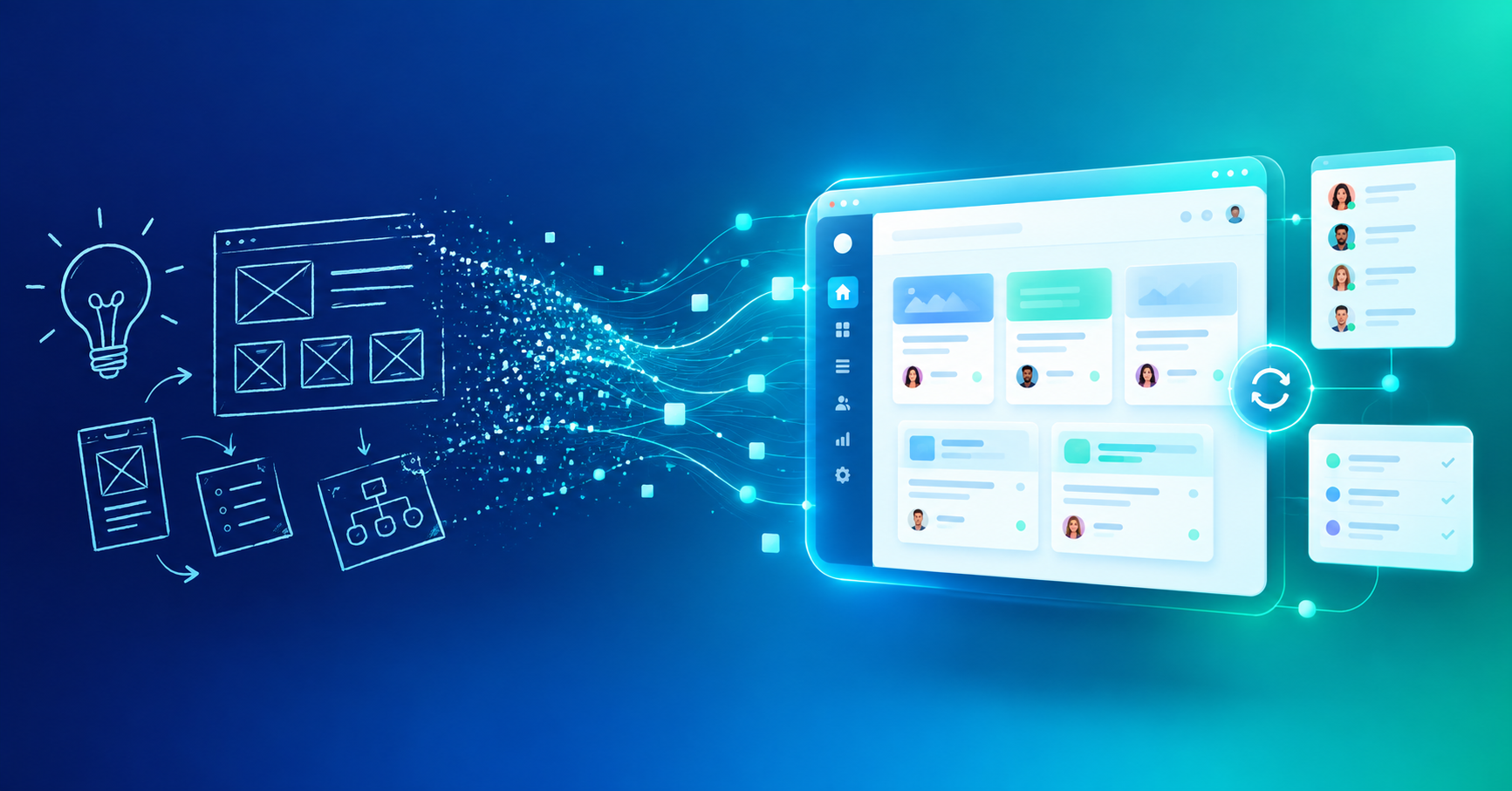
AI has made software feel more accessible than ever.
You can describe an idea in plain language and get code, screens, database suggestions, and a working prototype in a short time. For people who have always had app ideas but never knew how to build them, that is a real shift.
More people can now create software.
But creating an app is only the first step.
The harder question is: how do you turn that idea into a tool people can actually use every day?
A prototype is one thing. A working business app is another.
A business app needs to know who can access it, what each person can see, what they can edit, what happens when someone taps a button, and how information stays up to date across the team.
If the internet drops, the work should not stop.
If the business changes its process next month, the app should be able to change with it.
That is where many app ideas become stressful.
Building is not the whole job
Let us say you have an idea for a delivery tracker.
At first, the idea sounds simple:
- Add customer orders.
- Assign each order to a driver.
- Update delivery status.
- Capture the delivery location.
- Confirm that the customer received the package.
AI can help you start building something like this. It can help write code, suggest database tables, or generate an initial interface.
But once you want a real team to use it, more questions appear:
- How will drivers sign in?
- Can a driver see only their assigned orders?
- Can an operations manager edit every order?
- What happens when a driver has no internet connection?
- How do updates get back to the rest of the team?
- How do you add a new delivery status later?
- How do you make sure people are using the right version of the app?
These are not glamorous questions. But they are the questions that determine whether an app becomes useful or gets abandoned after a few days.
The same pattern applies to inventory tools, staff attendance apps, school record systems, sales trackers, booking tools, field data collection, and internal approval workflows.
The idea may be simple. Making it work reliably for real people is the work.

The infrastructure problem
When you build an app from scratch, you often need to make decisions beyond the feature itself.
You need a place for data to live. You need user accounts. You need to decide who has access to which information. You need a way to publish updates. You need to think about how the app behaves on a phone. You need to make sure the app does not stop being useful when someone has weak or no internet.
For a developer, these may be normal parts of the job.
For a business owner, operations manager, freelancer, or first-time builder, they can be the reason the project never gets finished.
The problem is not that people lack ideas.
The problem is that many people cannot justify building and maintaining a full software stack just to solve one operational problem.
A shop owner may only want a better way to track stock and sales.
A school administrator may only want attendance records that are easier to manage.
A delivery business may only want drivers to update orders from the road.
A field team may only need a form that continues working when the connection disappears.
They do not need to become infrastructure experts. They need a working tool.
Where Axiomers fits
Axiomers is a low-code app builder for internal business tools.
It is built for people who need to turn a real workflow into an app without starting from a blank technical foundation.
Instead of first worrying about infrastructure, you can focus on the workflow itself:
- Decide what information you need to track.
- Add collections and fields for that information.
- Choose how people will see it through tables, cards, calendars, charts, or dashboards.
- Add actions and workflows for the steps your team takes.
- Set up roles and permissions so people can only do what they are meant to do.
- Share the app with the people who need it.
That could be a sales tracker, a stock-management tool, a delivery workflow, an attendance app, a booking system, or an internal request and approval process.
The goal is simple: help you spend more time shaping the process and less time setting up the machinery around it.
Start with the workflow, not the code
A good internal app does not begin with code.
It begins with a question:
What does my team currently do in a spreadsheet, WhatsApp group, notebook, or paper form that should be easier?
For example, imagine a small retail business that tracks products and sales manually.
The owner might need:
- A list of products and current stock.
- A way to record each sale.
- Automatic totals for revenue, cost, and profit.
- A dashboard that shows how the shop is doing.
- Different access for cashiers and managers.
In Axiomers, that starts with the data: products, sales, and users.
Then the builder adds the fields each record needs. A product may have a name, price, cost, quantity in stock, and category. A sale may contain items, quantities, payment details, and the staff member who recorded it.
Next, the builder creates views for the team. A cashier might use a simple sales screen. A manager might use a stock table and a sales dashboard.
Finally, the builder sets the rules. Cashiers can create sales. Managers can update products and see the dashboard. The business keeps using the app as the process changes.
That is the difference between having an idea for an app and having a tool that supports real work.
AI can help with the blank page
Starting is often the hardest part.
Axiomers includes AI-assisted building for that moment when you know what you want to manage but do not know where to begin.
You can describe the app in plain language, such as:
Products with name and price, and a stock collection tracking quantity per product.
Axiomers can generate a starting structure with collections, fields, and views. You can then adjust it yourself or give the AI a follow-up instruction to refine the structure.
The important part is that the builder stays in control. AI suggestions are shown for review before they are applied. You decide what becomes part of the app.
AI should help remove the blank-page problem. It should not take ownership of your business process.
An app should work where work happens
Many internal tools are used outside an office.
They are used in shops, warehouses, classrooms, vehicles, sites, events, and on the road. In those places, reliable internet cannot always be assumed.
That is why Axiomers is offline-first.
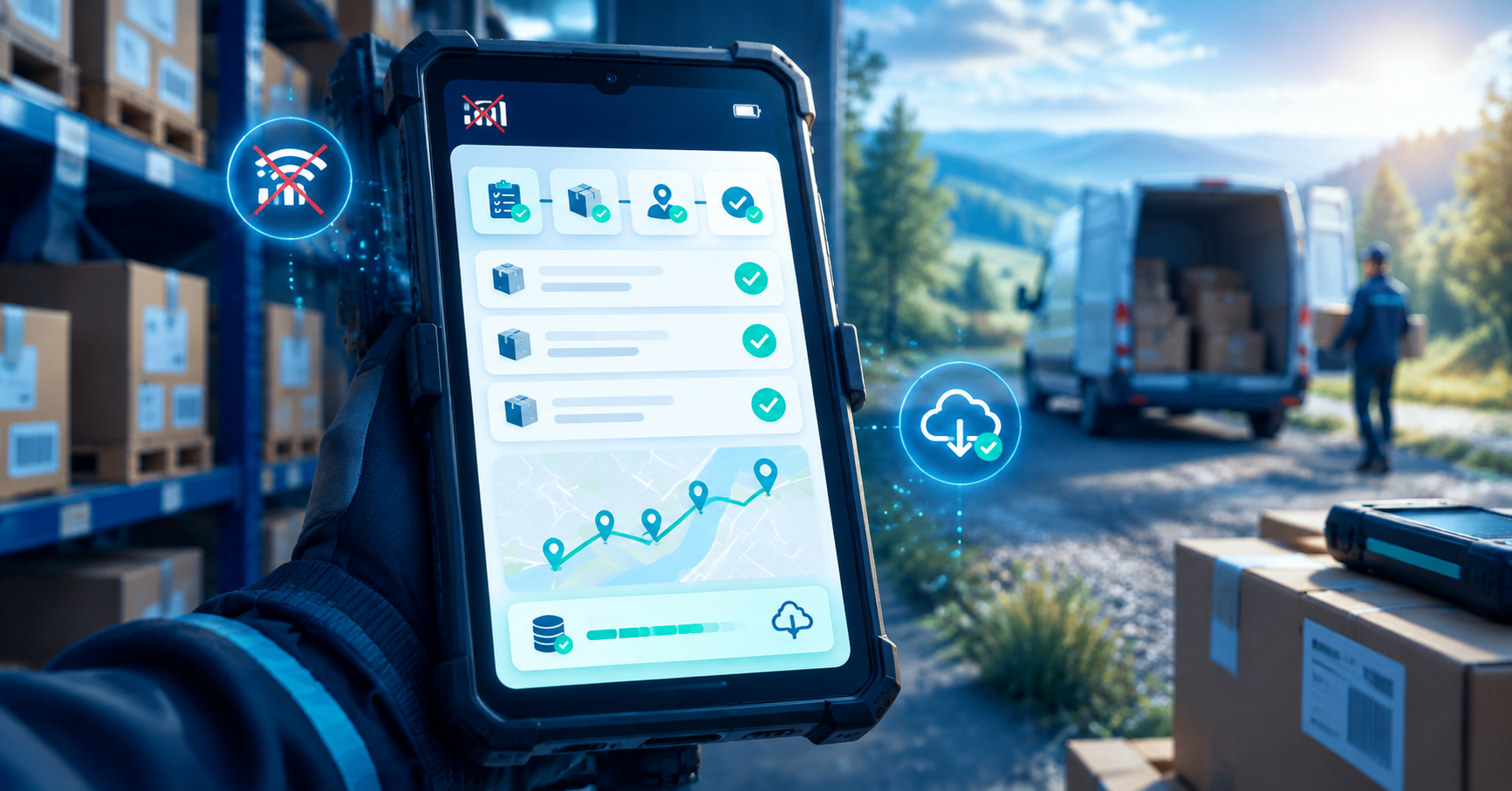
When a team member creates or updates a record, the change saves on the device immediately. They can keep browsing, creating records, editing data, and using workflows even without an internet connection. When the connection returns, the app syncs changes automatically.
For a delivery driver, that means a poor signal should not stop a delivery update.
For a warehouse worker, it means stock records can still be updated in the building.
For a field team, it means work does not have to pause until someone gets back online.
Offline support should not be an extra feature people discover after the app is built. It should be part of how the app works from the beginning.
You do not need to become a software company
AI is changing what people can build.
That does not mean every business owner, operations manager, or independent builder should have to become an expert in deployment, databases, authentication, permissions, and app maintenance.
People should be able to use technology to solve their own operational problems.
They should be able to build a tool for the way their business actually works, change it when the process changes, and give their team something simple to use.
That is the purpose of Axiomers.
Build the workflow you need. Give your team a real app. Keep moving, even when the internet does not.
Start with one real process
Do not begin by trying to digitise your entire business.
Choose one process that is already causing friction:
- Stock and sales tracking.
- Staff attendance.
- Delivery updates.
- Customer orders.
- Field data collection.
- Booking and scheduling.
- Internal requests and approvals.
Build that first.
Axiomers' free plan lets you build one app for up to 50 users, with no credit card required to start. That is enough to replace one real spreadsheet-based process and see whether the workflow works for your team.
Start building with Axiomers today. No waitlist.